






Ordering a book for the first time can be confusing for many people. Self-publishing authors, in-house publishing houses, and private publishers often don't understand what exactly happens between sending a file and receiving the finished copies. A well-organized process helps avoid unnecessary stress and mistakes.
In practice, the path from idea to finished book consists of several distinct stages. Each of them is crucial both to the quality of the final result and to the completion date. It's worth going through them consciously, rather than treating the order as a one-time formality.
Below you will find a step-by-step overview of the entire process, from file preparation, through pricing and approval, to production and delivery.
File preparation is the starting point of the entire process
Before any quote can be provided, properly prepared files are required. This typically means two separate PDFs: one for the book's interior and the other for the cover (including the spine). These files should be final, meaning they have correct bleeds, appropriate image resolution, embedded fonts, and proper page numbering.
Many authors and companies make the mistake of sending drafts at this stage. Any subsequent revisions can extend the entire process and impact the deadline. Therefore, it's important to treat file preparation as a separate, conscious step, rather than a quick project closure.
For novels, guides, or training materials, it's best to determine the format, number of pages, and nature of the publication in advance. Preparing a file for a photo album is different from preparing a file for a simple text book.
Valuation or what influences the price
Once the files are ready, the quotation process begins. Modern book printing houses offer an online configurator or send a request with basic parameters. Typical settings include format, number of pages, paper type, interior color, binding type, cover finishes, and print run.
The price isn't a random number. Each parameter has a real impact on the cost. Black-and-white printing will be cheaper than color, a softcover with a perfect binding will be more affordable than a hardcover, and a larger print run will lower the unit price. Therefore, it's worth comparing several options before making a final decision.
In practice, a response with a quote and an estimated completion date usually arrives within one business day. This is the time when details can be further refined or assumptions changed without impacting production.
Order acceptance and start of production
Once the quote and specifications are approved, the order is processed. At this stage, the files undergo another technical review, checking for bleeds, margins, image quality, and spine accuracy. If everything is in order, the book goes to press.
For small print runs and digital printing, the process can be relatively quick. Larger batches or more complex finishes can take longer. It's worth determining in advance whether you want an express turnaround or a more relaxed, standard process. Self-publishing authors find it particularly helpful to order a single sample copy first. This allows them to see the final result before launching a larger production run and avoid costly surprises.
Printing, binding and quality control
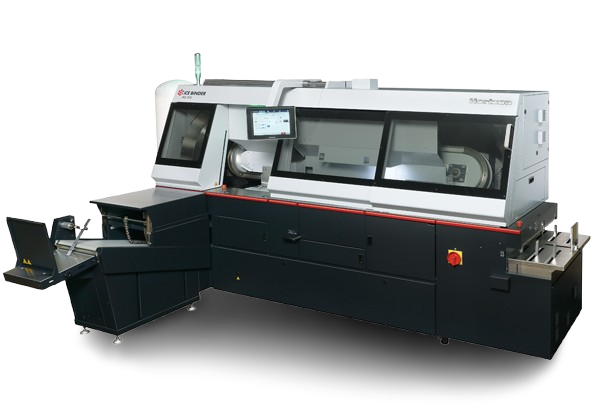
The production process itself includes block printing, cover preparation, gluing or other binding, and any necessary finishing touches. After the book is assembled, trimming and quality control are performed. The evenness of the spine, the quality of the gluing, the correctness of the trim, and the overall appearance of the copies are checked. This is a step that the client usually has no direct influence over, but it determines the final impression. A well-prepared file and precisely defined parameters translate into a repeatable, predictable result. That's why decisions made at the outset are so crucial.
Packaging and delivery
Once the books are ready, they are packaged and shipped. Depending on arrangements, personal pickup or courier delivery to a specified address is possible. For larger orders, it's worth considering shipping security in advance, especially if the books will be delivered directly to customers or event attendees.
For those ordering small batches or individual items, delivery is usually smooth and hassle-free. For larger orders, precise delivery address and delivery date information are crucial to avoid unnecessary delays.
The entire process from quote to delivery is much more transparent today than it was just a few years ago. Thanks to online configuration, book printing from 1 copy and clearly defined stages, the author or company can maintain control over the project without having to enter into complicated procedures.
If you're planning to print a book and want to go through the process with confidence, it's worth starting by fine-tuning your files and comparing several parameter options. A well-prepared order usually runs most smoothly and leaves fewer surprises in the subsequent stages.