



The choice of paper is rarely the first decision when publishing a book, but it should be one of the most important, as it influences the comfort of reading, the appearance of the photos, the weight of the volume and the message the publication itself conveys. Recycled paper It is no longer a niche addition "for eco-brands." It is increasingly appearing in self-publishing, corporate books, and educational series, but not because it is automatically better than classic offset, but because in some projects it better reflects the nature of the content.
The author of a novel, the person assembling a guide, and the company preparing a report or training material usually ask the same question: will a book printed on recycled paper look respectable and will the print retain its quality? In practice, the answer depends on what's inside. Text can handle recycling very well. A book with product photos or reproductions requires a more careful evaluation, as colors on recycled paper tend to be warmer and less contrasting than on chalk paper.
There's no one-size-fits-all answer. Recycled paper is best chosen when it supports the book's content, image, and usage, not when it's merely used to embellish the product description with the word "eco.".
Recycled paper is different from regular offset and FSC certified
Recycled paper is made from recycled fibers, meaning waste paper, not new wood pulp. It can be almost white, creamy, or distinctly natural in color, depending on the recycled content and bleaching method. Modern recycled book papers, such as uncoated Nautilus, can produce legible text and a pleasant texture, but still retain a slightly different appearance than classic virgin fiber offset. The surface can be more matte and "papery" to the touch, and ink absorbs differently, so blacks and colors can appear slightly warmer.
It's worth separating recycling from FSC certification, as they're not the same thing. FSC addresses the origin of the fiber and the supply chain, while FSC Mix paper doesn't necessarily have to be made from recycled paper in 100%. Recycled paper, on the other hand, may bear the FSC Recycled label, but the mere fact of being recycled doesn't replace certification. If a company is looking for an ESG report or a logo on a publication, it's important to verify which label can actually be legally placed on the book.
While this difference may be invisible to a novel reader, for a company's communications department, it's a crucial image decision. Therefore, before choosing paper, it's important to determine whether you want a textured, environmentally friendly design, a certificate, or both.
When Recycled Paper Works Well in a Text Book
In novels, essays, memoirs, and textbooks, recycled paper usually works to the reader's advantage because it doesn't reflect light like chalk and provides a calmer, more natural surface. At around 80g, the book remains lightweight, and the pages don't feel like stiff cardboard. If the tone is creamy or slightly off-white, long reading can be even more enjoyable than on stark white offset paper, which can be eye-straining in bright light.
In self-publishing, this choice makes even more sense when the content already speaks about a conscious lifestyle, education, relationships with nature, or locality. Paper ceases to be merely a substrate and begins to support the message. However, this doesn't mean that every novel "has" to be recycled. A crime novel, romance, or a purely entertaining book can work just as well on classic cream offset paper if the author prioritizes low weight and a predictable whiteness of the pages.
For training materials, recycling is beneficial when the publication is intended to be read, noted, and treated utilitarian, rather than viewed like a catalog. The uncoated surface holds up better to pencils and pens than chalk, so a textbook, exercise book, or in-house manual often benefits more from such paper than from a coated substrate.
Sometimes it's better not to rely on recycling, especially when it comes to photos
Albums, lookbooks, and publications with a large number of photos require a different calculation, as paper with a high recycled content typically reduces contrast and color saturation. Blacks become less deep, and shadow details can appear warmer and slightly softer. In art reproductions, product photography, or catalogs where color is a part of the offering, this difference can be readily apparent. In such projects, recycling isn't inherently bad, but it's no longer the first choice if faithful reproduction of the image remains the priority.
There are coated recycled papers that handle color better than raw offset recycled paper, but even they don't always catch up with classic satin chalk. Therefore, when making an album, it's worth comparing samples rather than deciding based on the "eco" label. If the photos are intended to sell a product or document details, coated paper with a fiber origin certificate is safer than recycled paper in 100%, which has a significantly different look.
A company book with photos of investments, interiors, or products sits in the middle. When a publication aims to build a responsible brand image while simultaneously showcasing the quality of the photos, it's sometimes better to choose FSC paper with a predictable whiteness than to resort to a highly natural recycling approach. However, if a company wants the material itself to speak of resource conservation, a warmer white and visible texture can be an advantage, provided the graphic designer consciously prepares the files for this substrate.
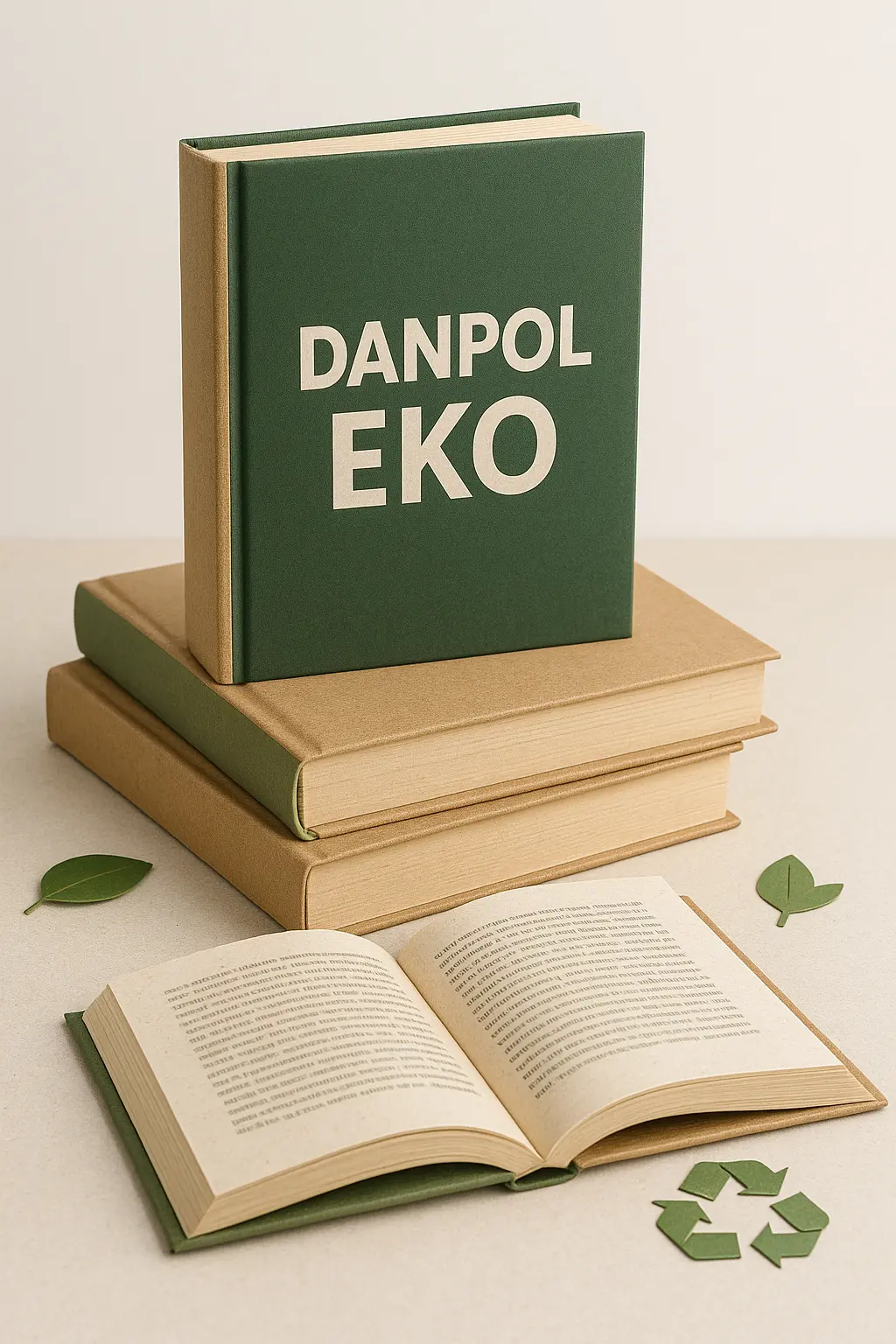
How recycled paper affects appearance, weight and binding
The choice of recycling doesn't end with the book's center, as the cover can also be made from recycled pulp, giving the entire volume a cohesive character. Softcovers on recycled cardboard plus an uncoated core look natural and work well with guides, educational publications, and many company books with a subdued aesthetic. Hardcovers on this type of paper are possible, but the premium effect is achieved through texture and craftsmanship, not the gloss of chalk. Grammage still follows the same principles as standard offset printing. For most textbooks, 80g is sufficient, while thicker paper makes sense for heavy use or when you want greater page stiffness. Recycling alone is no substitute for choosing the right grammage. Too thin paper, even eco-friendly, will show through the text on the adjacent page, while too thick will unnecessarily increase weight and cost.
It is also worth remembering about refinements – foil, UV varnish and hot stamping can be combined with a recycled cover, but the visual effect will be different than on snow-white coated cardboard. Calmer gestures work better on a natural surface – matte, soft touch, delicate embossing. A high-gloss finish on what appears to be recycled cardboard can sometimes look inconsistent because the material says one thing and the finish says another.
Recycling is an image decision, not just a technical one.
In self-publishing, recycled paper makes the most sense when the author wants the book's subject matter to be consistent with its content. The reader picks up the volume and immediately feels a different texture, which reinforces the message better than a mere paragraph about ecology on the cover's back cover. For the first, test print run, there's no need to build an entire "eco-friendly line" right away, but it's worth consciously comparing recycled paper with classic cream offset, as the difference in perception can be greater than the price difference.
For a company, recycling becomes a key argument in reports, presentations to partners, and training materials, intended to demonstrate consistency between the declaration and practice. What matters here is not only the paper itself, but also whether it can be described honestly: its recycled content, whether it is certified, and whether the printing house actually uses such a substrate. The empty slogan "ecologically printed" without precision quickly becomes a decorative element.
A publisher or author of an educational series might consider recycling a permanent component of their publishing line. If subsequent installments of a guide or textbook are published on the same paper, it creates a recognizable series character. In a collector's album, the same decision could weaken reproductions, so it's best not to automatically transfer the choice from one publication to all others.
What to look for before ordering printing on recycled paper
First, you need to see the paper, not just its name. The shade, texture, and ink behavior are only apparent on a sample or proof. A design prepared for a sharp white offset might appear too dark or too warm on recycled paper, especially if the pages contain charts, photos, and visual identification elements. Therefore, it's worth proofing files for company books and albums with the specific substrate in mind.
The second thing is to name your selection honestly. If you're aiming for environmentally friendly communication, include the truth in the description: the recycled content, the certificate, and the paper type used for the inside and cover. Mixing the terms "FSC," "recycling," and "carbon neutrality" obscures the message and undermines trust. The third factor is the circulation. When printing a small number of copies, recycling can be implemented without building a large print run, which in self-publishing and corporate publications can be more important than the environmental argument itself.
There are also ready-made book variants available on recycled paper, such as an uncoated Nautilus paper core and a coated recycled cardboard cover. This set makes it easier to decide when you want a consistent effect without having to create the parameters from scratch, but it's still worth checking whether the paper's appearance is suitable for your specific project.
Recycled paper It's a good choice when the book is primarily intended to be read, not viewed like a photo catalog, and when the texture and origin of the substrate support the content or the publisher's image. In novels, guides, training materials, and many corporate publications, this choice looks natural and doesn't detract from the quality of the text. In albums and books based on precise color, it's better to compare samples first, as recycling changes the perception of the photographs.
If you're hesitating between traditional offset and recycled paper, the surest way is to compare both options on a quote and see the physical result on a small trial run. This approach allows you to decide based on the actual book, rather than on a catchy phrase in the description.