






At first glance, choosing a book's binding seems like a technical decision. In practice, however, it influences almost everything: how the publication feels in your hand, how it presents on the shelf, how much it weighs, how long it will last, and how much it will ultimately cost. A paperback novel, which can be easily folded while reading, has a different feel than a hardcover album or company report, which is intended to convey a sense of solidity and prestige.
There is no one right answer for every book. Soft binding will work in completely different situations than hardcover. The difference is not only in appearance, but also in durability, weight, production costs, and user experience. A self-publishing author, a company preparing training material, and a publishing house planning a larger print run will all make this decision for different reasons.
It's worth taking a calm and focused look at this topic. Below, you'll find a practical comparison of both solutions, their typical applications, and the real impact on the price of the finished book.
What is the difference between a softcover and a hardcover?
Softcover (usually glued) involves the book block being glued to a flexible cover made of thicker paper or cardboard. The cover bends with the block, making the book lighter and more comfortable for everyday use. This solution prevails in most novels, guides, manuals, and publications published in larger editions.
Hardcover binding works differently. The book block is bonded to cardboard covers, providing stiffness and greater resistance to damage. Such a book stands up better on the shelf, looks more presentable, and usually retains its appearance longer even after heavy use. However, it is associated with greater weight, higher material costs, and a more complex production process. The difference, therefore, is not simply "softcover = cheaper, hardcover = more expensive." Each type of binding brings a different character to the publication and different practical implications.
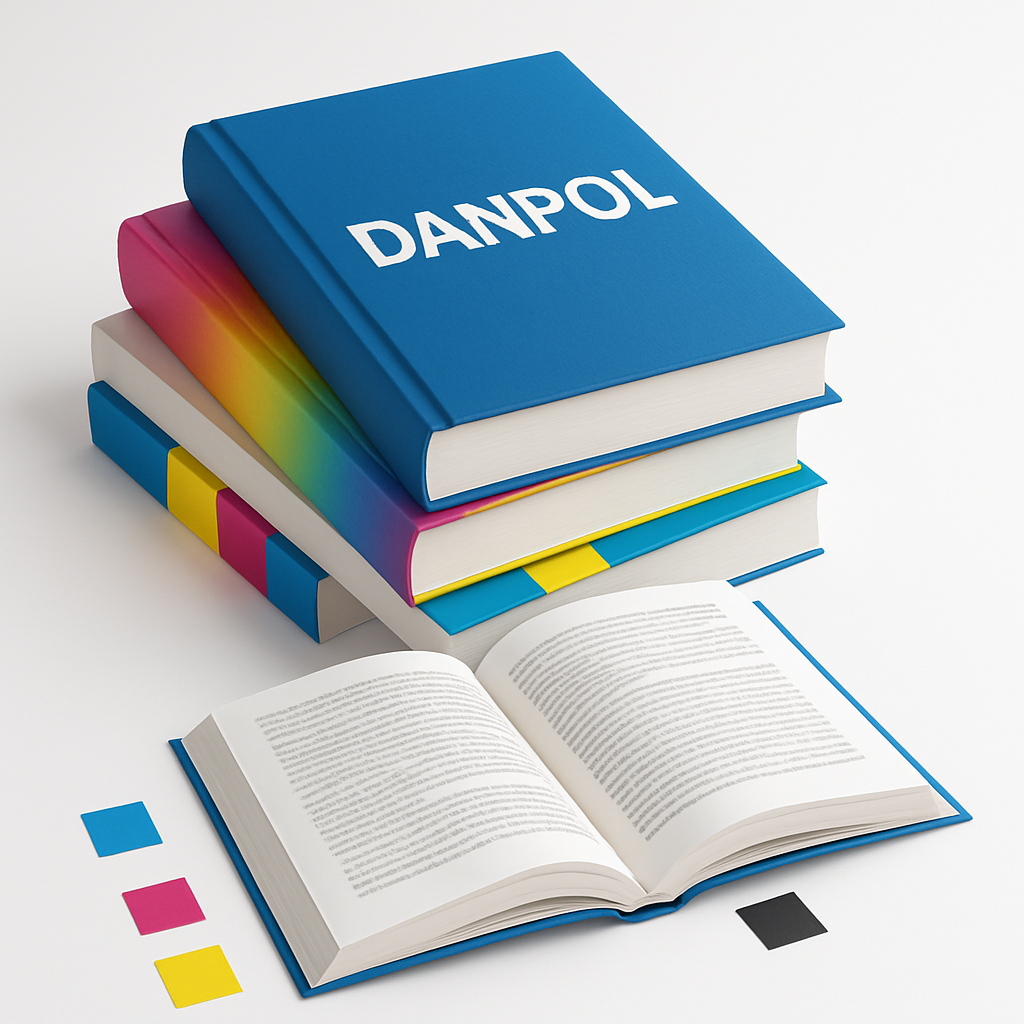
When is a softcover binding a better choice?
A glued softcover works particularly well when the book needs to be comfortable to read, lightweight, and not necessarily presentable. It's a natural choice for novels, poetry collections, textbooks, training materials, and most self-published publications. In practice, a softcover offers several specific benefits. The book fits better in the hand, opens more easily, and doesn't feel stiff. With more pages, the difference in weight becomes noticeable—a softcover publication is simply lighter. This is important both for everyday reading and when shipping large quantities.
W DANPOL printing house Glued softcover binding is the basic and most frequently chosen solution. Thanks to our in-house bindery, the gluing and cover finishing process is fully controlled, and books from a single copy can be produced using the same technology, which later proves effective for larger print runs. Softcover also works well with various cover finishes, such as matte, glossy, or soft-touch foil. This allows even a structurally simple book to look aesthetically pleasing and modern.
When is it worth choosing hardcover?
Hardcovers make sense when a book needs to convey a sense of durability, prestige, or is intended to be used intensively for a long time. Typical examples include photo albums, premium catalogs, anniversary books, representative company publications, some textbooks, or books that are intended to remain on the shelf for many years.
A hardcover better protects the block from damage, warps less, and usually maintains its good looks longer. This difference can be noticeable in publications that are frequently reviewed, passed on, or presented to clients.
However, it's important to remember that hardcovers increase the book's weight and production costs. For small print runs and test projects, the price difference can be particularly noticeable. Therefore, it's important to carefully assess whether the additional durability and presentation are truly necessary for a given project.
How does the type of binding affect the perception of different types of books?
A hardcover novel or textbook may look elegant, but it can also be less convenient for everyday reading. Many people prefer a paperback because it's easier to carry and read in a variety of conditions.
A photo album or a softcover product catalog, on the other hand, can feel less premium, even if the paper and printing are high quality. a hard cover often better highlights the nature of the publication.
A corporate book or training material falls somewhere in between. If the publication is intended to be distributed to event attendees or used as work material, a paperback is usually sufficient and more practical. However, if it's intended to represent the brand at a booth, in a management office, or as an elegant gift, a hardcover may be more appropriate.
In self-publishing, the decision often depends on the project stage. For the initial release and to test interest, a paperback allows for cost savings and a chance to see how the book is received. For subsequent print runs, once the book sells well, some authors opt for a hardcover as a special or premium edition.
The influence of binding on the price of book printing
Binding type is one of the factors that truly influences pricing. Glued softcovers are typically cheaper to produce because they require fewer materials and a simpler binding process. Hardcovers generate higher costs for cardboard, veneering, and assembly, which translates into higher unit prices.
The difference isn't constant and depends on the format, page count, print run, and any additional finishing touches. For smaller print runs (a few or a dozen copies), the percentage price increase may be more noticeable. For larger runs, the costs are distributed differently, but hardcovers remain more expensive.
It's also worth remembering indirect costs. A heavier hardcover book increases shipping costs, especially for larger quantities. In projects where distribution efficiency is key, this difference can be significant. In practice, it's best to compare specific options. At the DANPOL printing house you can configure a book with a soft cover and glued binding. and immediately see how the price changes with different parameters. This means that the decision isn't based on general assumptions, but on real numbers for a given project.
Durability, weight and comfort of use
Durability is one of the most common arguments for hardcover binding. Indeed, stiff covers better protect the book block from creases and mechanical damage. This is important for intensive use, especially in institutions, schools, or companies. At the same time, ease of use often favors paperback binding. The book is lighter, opens more easily, and is less tiring to read for long periods. For publications intended to be read, not just viewed, this difference can be crucial. Weight also matters for storage and transport. For larger print runs, the difference in kilograms can be noticeable both to the author sending the books and to the company distributing the materials to event participants.
What else is worth considering before making a decision?
Before making your final choice, it is a good idea to answer a few practical questions:
- Is the book supposed to be primarily comfortable to read, or is it supposed to create an impression of prestige?
- how intensively will it be used?
- What is the planned circulation and budget?
- Will the publication be sent by post or delivered in person?
- Are you planning a standard version and possibly a premium edition later?
It's not always necessary to immediately choose a more expensive option. Often, a better approach is to start with a paperback, see how the book is received, and only then consider a hardcover for the next printing or special edition.
It's also worth remembering that binding alone doesn't determine a book's quality. Equally important are the choice of paper, proper file preparation, print quality, and a carefully crafted spine. A well-prepared paperback book with a perfect binding can look and function better than a poorly finished hardcover publication.
The choice between softcover and hardcover should be based on the nature of the publication, its intended use, and a realistic budget, not on the assumption that "harder is always better." Glued softcover offers convenience, lower cost, and great flexibility—especially for self-publishing, guides, novels, and training materials. Hardcover is suitable for applications where durability and a presentable appearance are essential.
At our printing house, you can order a softcover book with a perfect binding, starting from just one copy, and customize the parameters to suit your project. If you're unsure which option is best, it's worth comparing specific quotes and, if possible, seeing the final result before committing to a larger print run.