






The choice of method for connecting the book block to the cover affects much more than just the appearance of the finished publication. It determines how the book will open, how long the pages will stay in place, its weight, and how it will hold up under everyday use. Glued binding is currently the most popular solution for paperbacks, but it's not always the obvious choice for every project.
Many authors and companies ordering print for the first time treat it as the default option, without delving deeper into how it works and in which situations it performs best. However, the differences between pure gluing and sewn-glued or hard solutions can be noticeable in both durability and price.
It is therefore worth taking a closer look at what glued binding is, what its real advantages and limitations are, and when it is actually worth choosing it.
How is a glued book binding made?
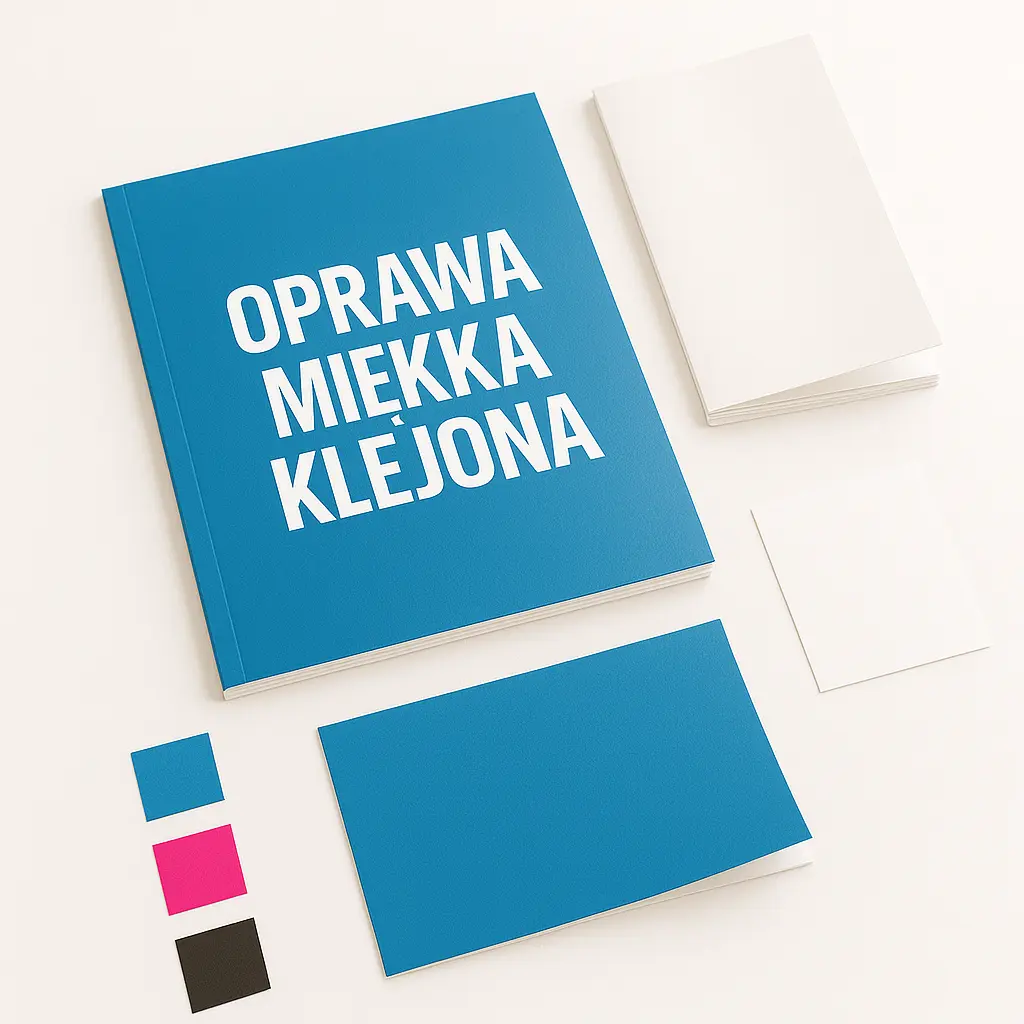
Glued binding involves permanently joining the book block to the cover using a special bookbinding glue. The printed sheets are first folded, trimmed, and arranged into a neat block. The spine of the block is then milled or scored to allow the glue to penetrate better between the pages, and then coated with glue and pressed against the cover.
In practice, this means that the pages are not stitched together with thread, but held together solely by a layer of glue. Once the glue has set, the book is trimmed on three sides, resulting in clean edges and a characteristic, flat spine.
Depending on the adhesive used, several variants are distinguished. Classic hot-melt adhesive is cheaper and faster to apply, while PUR (polyurethane) adhesive is characterized by greater flexibility and better resistance to aging and temperature changes. In many modern printing houses, PUR technology has become the standard for perfect softcover binding.
What is the difference between glued binding and sewn and glued binding?
The most important difference is the way the cards are joined together.. In sewn or sewn-glued binding, the blocks are first stitched together with thread and only then glued to the cover. This makes the structure more resistant to frequent opening and extended use.
Glued binding eliminates the need for threads. This makes it simpler and cheaper to produce, but it's also somewhat less durable for very thick blocks or books that are frequently and severely bent. In practice, the difference is most noticeable in publications with large numbers of pages or those subject to intensive use, such as in schools or training sessions.
For most novels, guides, catalogs, and corporate materials, a well-made glued binding (especially one with PUR glue) is perfectly adequate. The book opens flat enough, and the pages don't fall out under normal use.
When glued binding works best
Perfect binding is particularly well-suited to publications that are lightweight, comfortable to read, and don't require extreme durability. Typical applications include:
- novels and fiction,
- text guides,
- training materials and scripts,
- product catalogs,
- company books of an informative nature,
- self-publishing publications in medium circulation.
For smaller and medium-sized pages (usually from a few dozen to around 300-400), glued binding offers excellent value for money. The book remains lightweight, fits comfortably in the hand, and doesn't feel stiff.
For photo albums, premium publications, or books that will be frequently browsed by many people, it's worth considering sewn-glued or hardcover solutions. In these cases, greater durability may outweigh the lower cost.
How does glued binding affect the reception and use of a book?
One of the noticeable features of a well-made glued binding is the way it opens. The book doesn't open completely flat like some sewn bindings, but with PUR glue, the difference is smaller than with older hot-melt technologies. Most people don't experience discomfort during everyday reading. The weight of the publication remains favorable, as a glued softcover is significantly lighter than a hardcover. This is important both for extended reading and when shipping large quantities. Durability depends heavily on the quality of the glue and the correct spindle milling. Modern glued bindings with PUR glue can withstand normal use and should not cause problems for many years, provided the book is not deliberately damaged or left in extreme conditions (very high humidity, intense heat).
What should you pay attention to when choosing glued binding?
Before making a decision, it is worth considering a few practical issues. The number of pages matters – with very thick blocks (over 400-500 pages), pure gluing may be less stable than the sewn-glued solution. The type of paper also affects the effect – Thicker, stiffer papers require more careful spine milling. It's also worth determining how intensively the book will be used. A single original copy, a novel for home reading, or a catalog distributed to clients will have different requirements than a textbook used by dozens of students throughout the semester. Budget is also a factor. Glued binding allows for a significant reduction in costs individual in comparison to hardcover or sewn-glued binding, which can be decisive in the case of larger editions or test projects.
Glued binding for self-publishing and small editions
For independent authors and companies ordering small runs, perfect binding is often the best starting point. It allows for a reasonable price even when printing just a few or a dozen copies, while also providing a professional, marketable appearance.
Many self-publishers start with a softcover, see how the book is received, and only then consider a premium or hardcover version for subsequent print runs. This is a sensible approach – there's no need to immediately invest in the most expensive solutions if the project is still in the market testing phase.
With a well-prepared file and a carefully crafted spine, a glued book looks solid and is of the same quality as many publications available in bookstores.
Glued binding remains the most versatile and economical method for connecting the block to the cover in paperbacks. It works well for novels, guides, training materials, and most corporate and self-published publications. It's a worthwhile choice when lightness, comfortable reading, and reasonable cost are key, and intensive use doesn't require the maximum durability of a sewn construction.
If you are planning book printing and you are wondering about specific binding parameters, you can compare variants in the online configurator or consult the design before placing an order – especially with an unusual number of pages or demanding paper.